
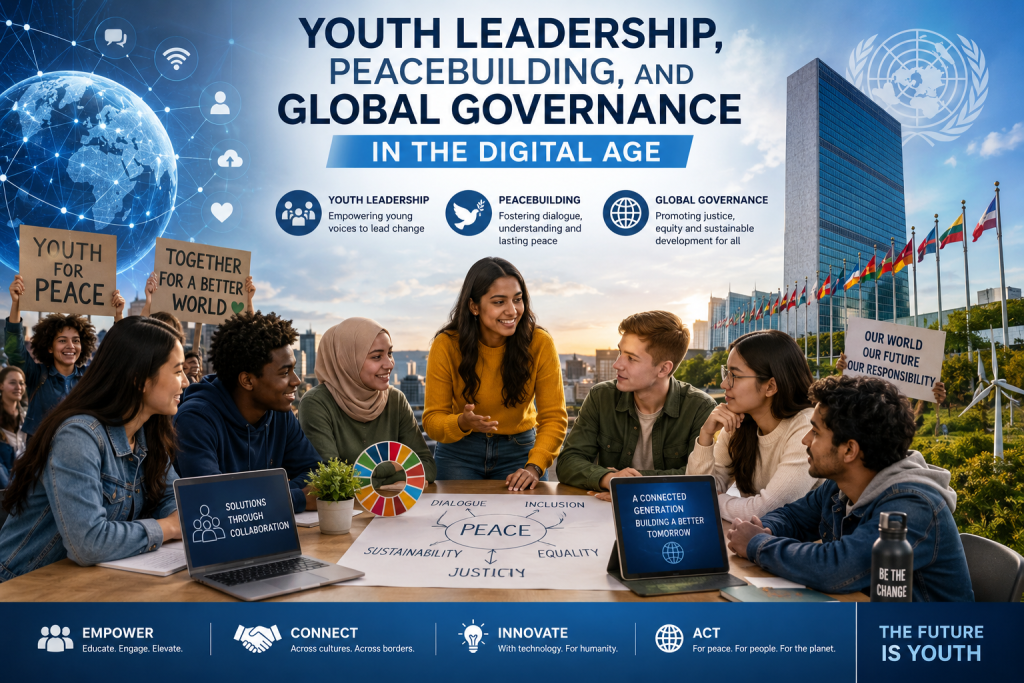
The 13th International Youth Conference, organized by the International Organization of Youth and hosted at the University of California, Los Angeles, provided a powerful platform for examining the evolving role of young people in shaping peace, justice, diplomacy, governance, and technological innovation. As a delegate, I participated in several thought-provoking sessions that collectively reinforced one central truth: the future of sustainable development and global peace depends significantly on the meaningful inclusion and empowerment of young people.
A recurring theme throughout the conference was the urgent need to move beyond symbolic youth participation and embrace genuine youth leadership. Discussions on the United Nations Youth, Peace and Security Agenda highlighted the importance of implementing United Nations Security Council Resolution 2250, which recognizes young people as active partners in peacebuilding rather than passive victims of conflict. Across the world, young people are already leading community dialogues, promoting social cohesion, combating extremism, and advancing civic engagement. However, their efforts often lack the institutional support, funding, and policy recognition necessary to maximize impact.
The conference also explored the growing intersection between technology and peacebuilding. Artificial Intelligence is rapidly transforming governance, security, education, healthcare, and international cooperation. While AI offers enormous opportunities for conflict prevention, humanitarian response, and inclusive development, it also presents risks such as misinformation, digital manipulation, bias, and social polarization. Participants emphasized that ethical governance, transparency, accountability, and youth inclusion must guide the development and deployment of emerging technologies. Young people are not merely consumers of technology; they are innovators, creators, and digital peacebuilders capable of shaping AI as a force for human progress.
Another important focus was justice, opportunity, and self-determination. Discussions revealed how many young people continue to face systemic barriers including poverty, unemployment, discrimination, inadequate education, and social exclusion. Yet countless youths have transformed adversity into advocacy, becoming mentors, community leaders, and agents of change. The conference stressed that empowerment is not charity but justice. Governments, institutions, and communities must invest in education, mentorship, rehabilitation, entrepreneurship, and inclusive policies that enable young people to realize their full potential.
Youth participation in policymaking emerged as another critical pillar of sustainable development. Through collaborative policy discussions and contributions to the Pathway to Peace Declaration, delegates demonstrated that young people possess the vision, creativity, and practical solutions necessary to address complex global challenges. Issues such as peacebuilding, climate action, digital governance, human rights, social justice, and economic opportunity require policies informed by youth perspectives. Meaningful participation strengthens democracy, promotes innovation, and enhances social stability.
The conference further highlighted the evolving nature of diplomacy in the twenty-first century.
Traditionally viewed as the domain of governments and career diplomats, diplomacy is increasingly being reshaped by young professionals who bring innovation, inclusivity, and fresh perspectives to global governance. Through internships, fellowships, youth delegations, advisory roles, and digital engagement, young leaders are contributing to international decision-making processes and advancing solutions to global challenges. The rise of digital diplomacy has further expanded opportunities for youth participation, enabling greater collaboration across borders and cultures.
Across all sessions, several common principles emerged. Peacebuilding requires inclusion. Innovation requires ethical leadership. Justice requires opportunity. Governance requires participation. Diplomacy requires diversity. Most importantly, sustainable development requires trust in the capabilities of young people.
The conference served as a reminder that young people are not simply the leaders of tomorrow; they are already leading today. Whether promoting peace within communities, developing responsible technologies, advocating for justice, shaping public policy, or contributing to international diplomacy, youths are playing a vital role in building a more peaceful, inclusive, and sustainable world.
As global challenges continue to evolve, the international community must move beyond rhetoric and create tangible pathways for youth leadership. Governments, educational institutions, civil society organizations, private-sector actors, and international bodies must invest in youth-driven solutions, strengthen intergenerational collaboration, and ensure that young voices are integrated into decision-making processes at every level.
The future of global peace, governance, and sustainable development will not be determined solely by policies or technologies. It will be determined by how effectively societies empower young people to lead, innovate, and contribute to the common good. When youths are trusted, supported, and included, they become powerful architects of a more just, peaceful, and prosperous world.

